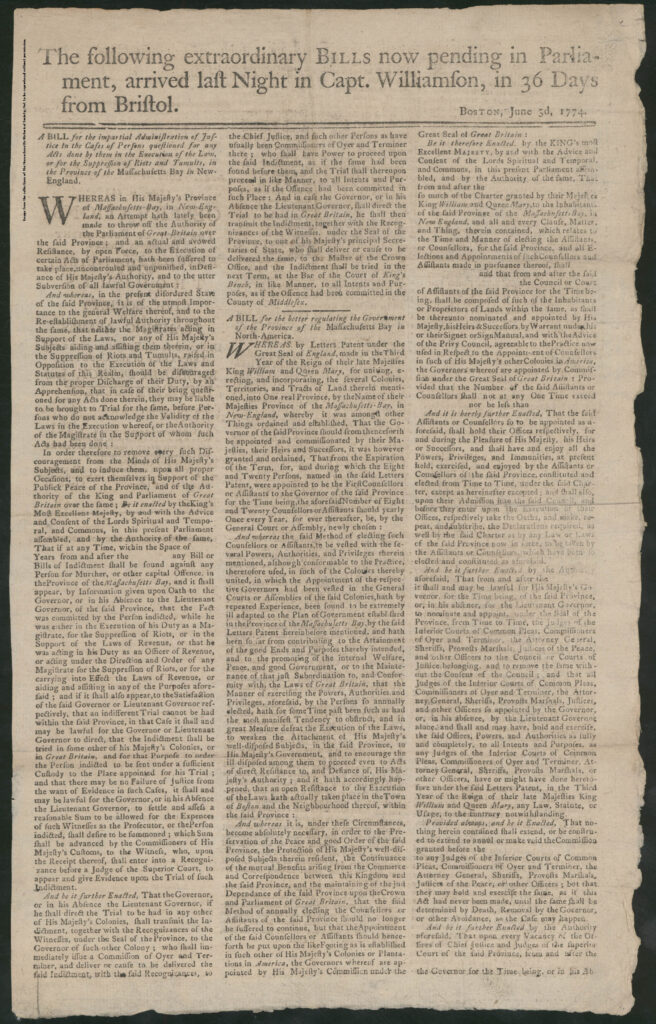
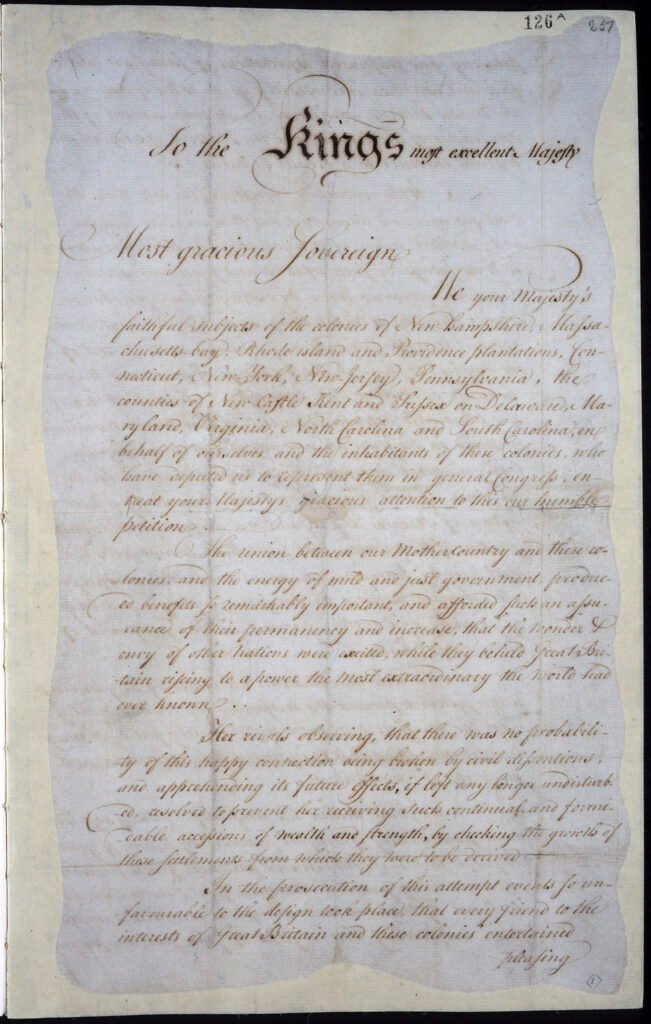
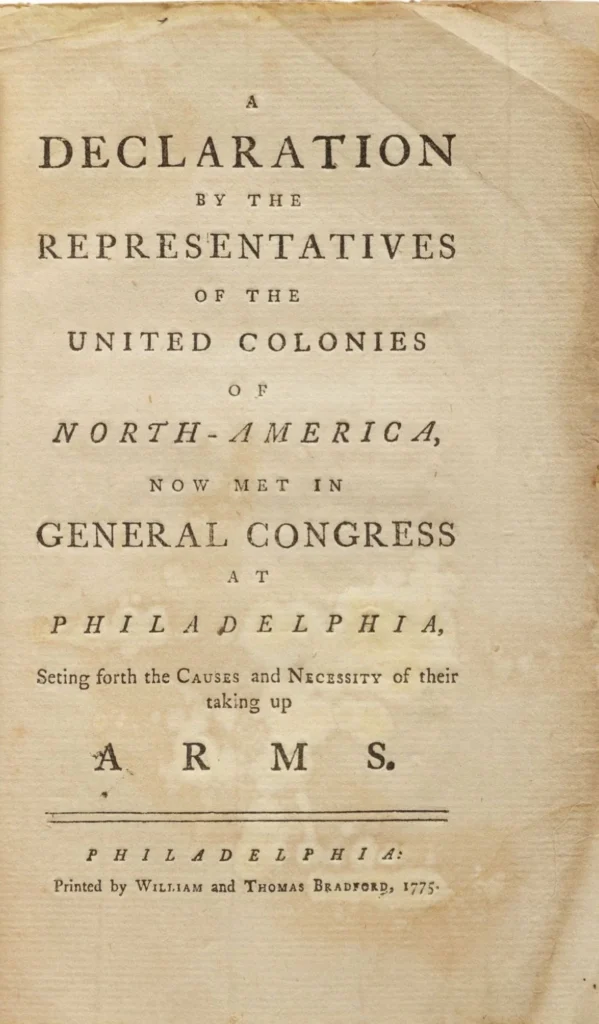
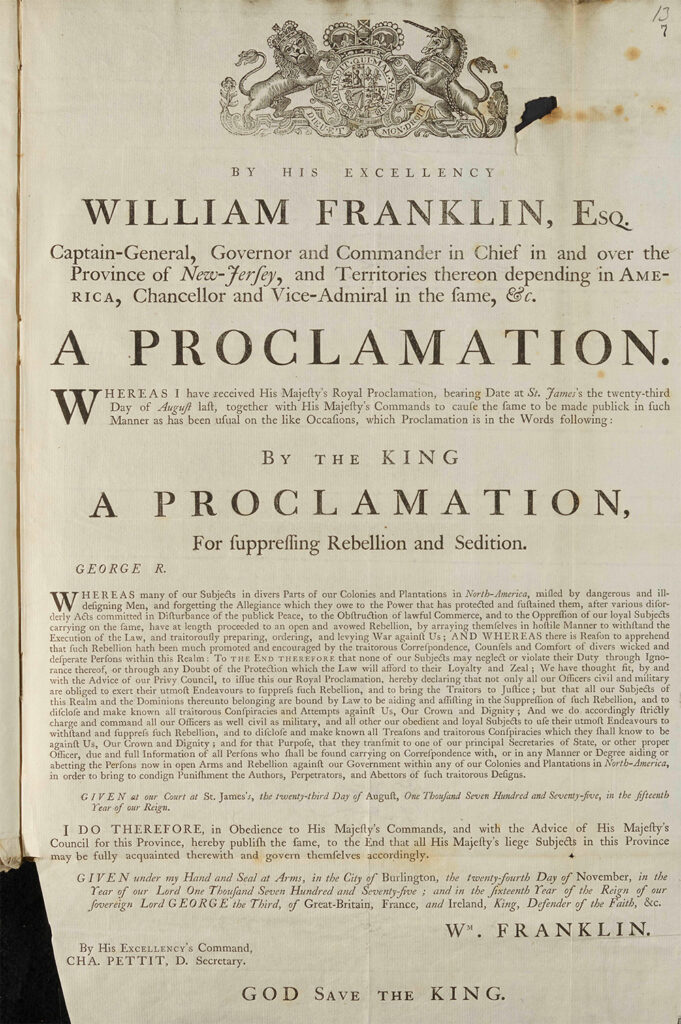
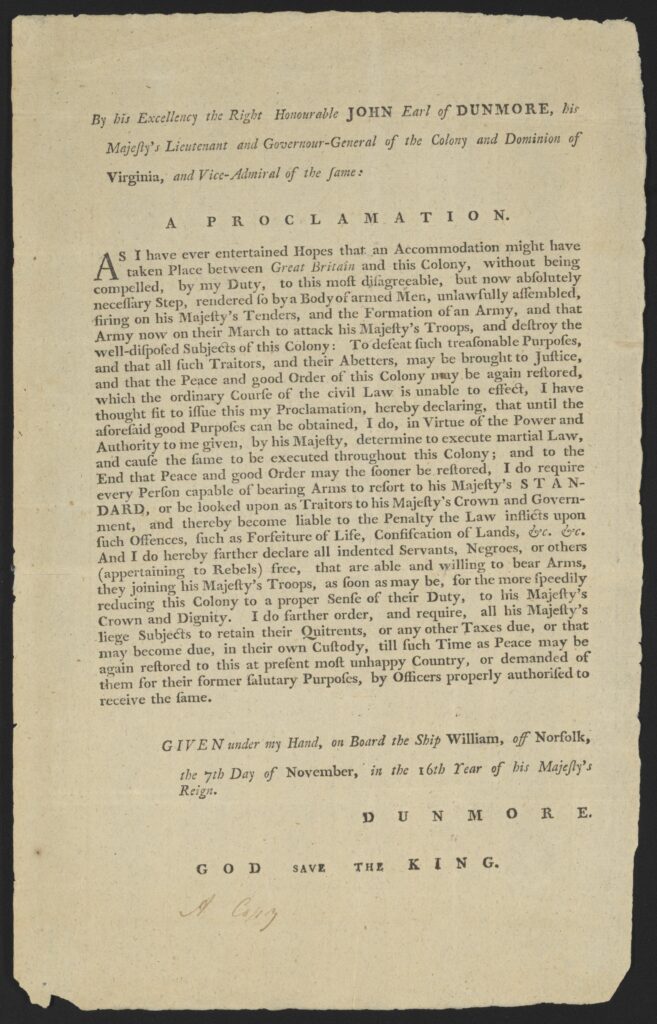
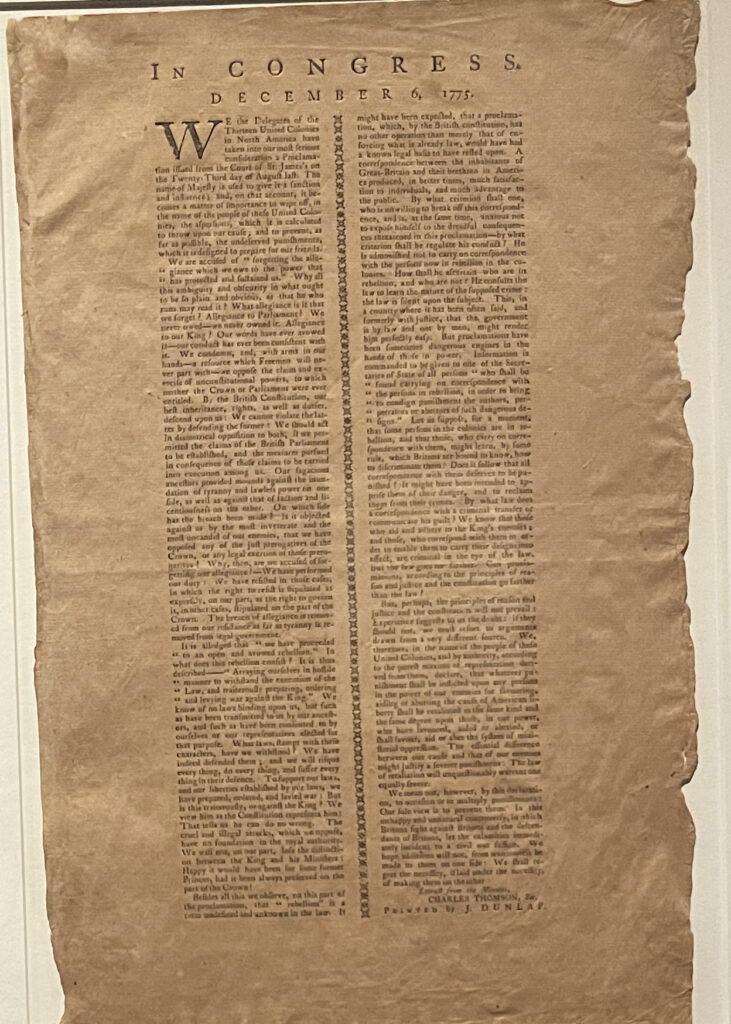
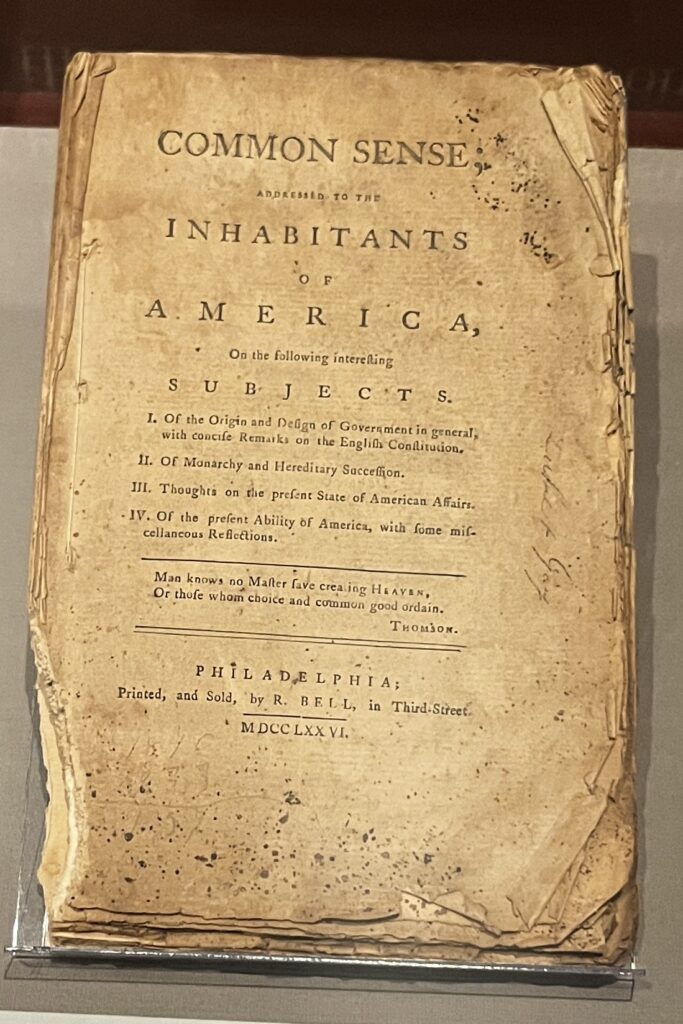
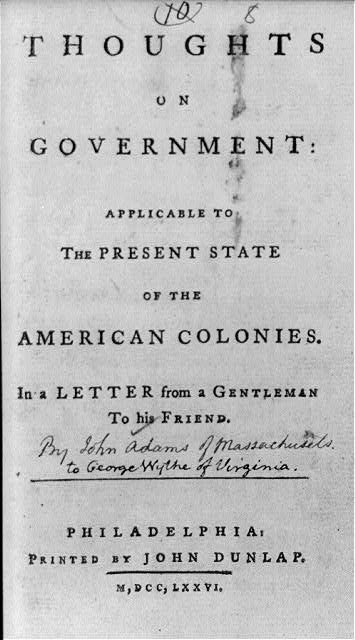
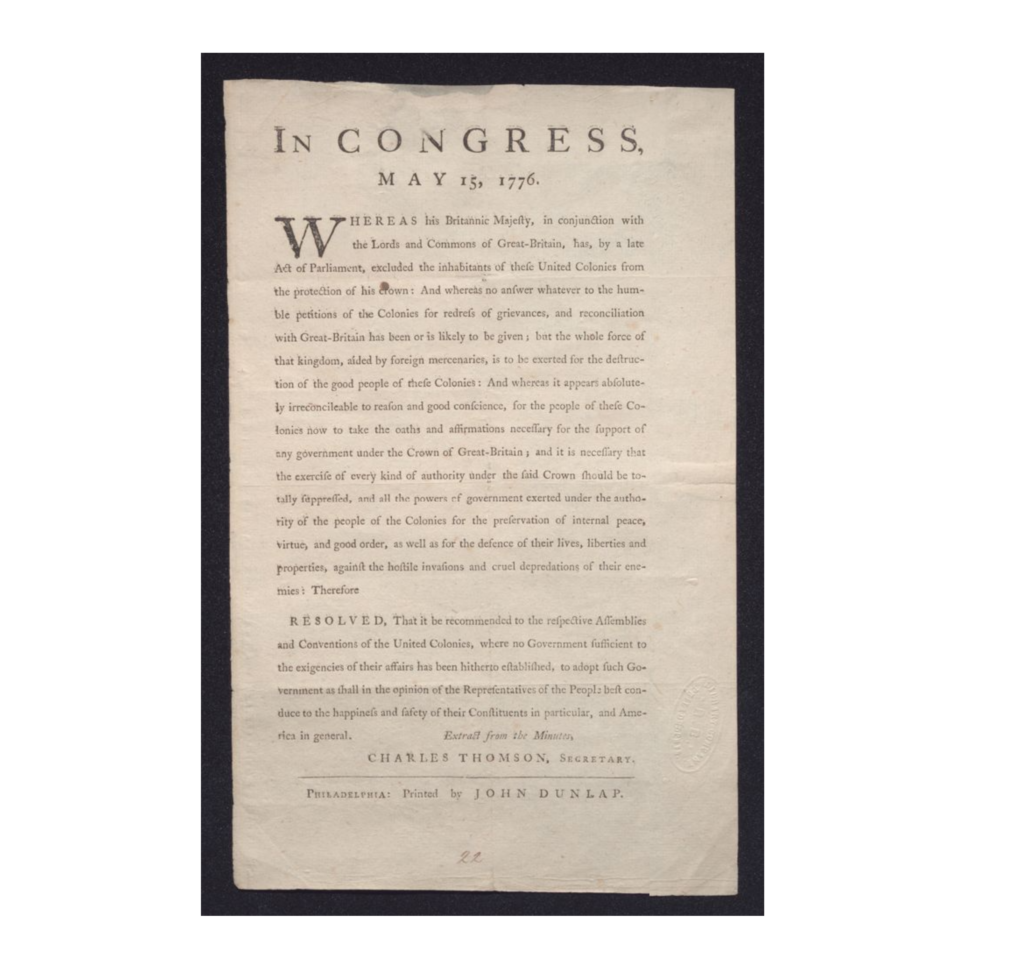
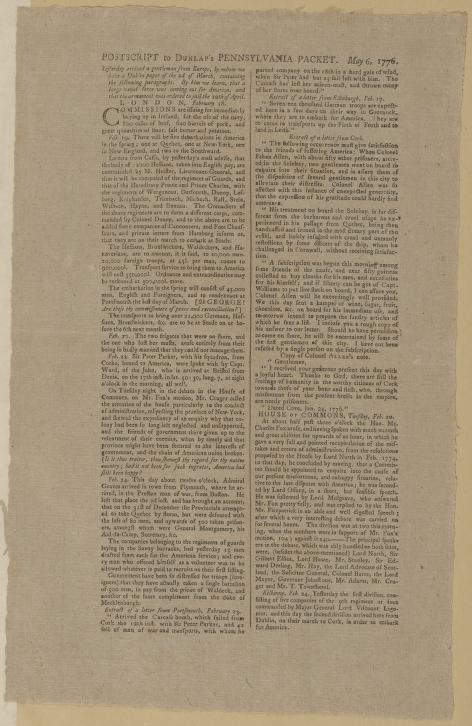
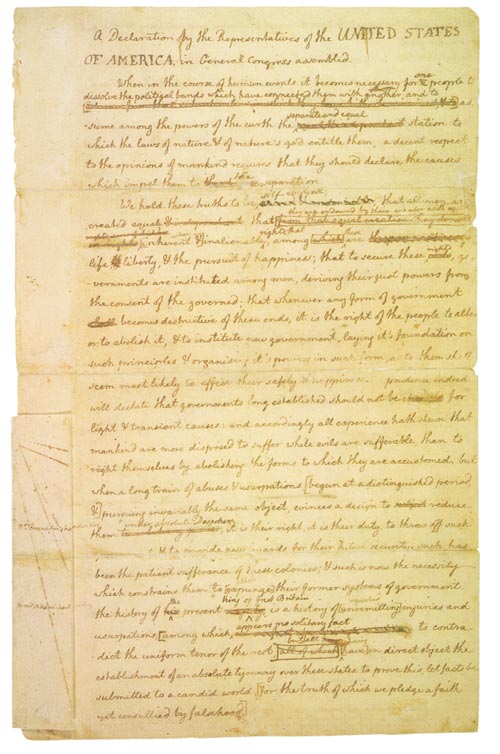
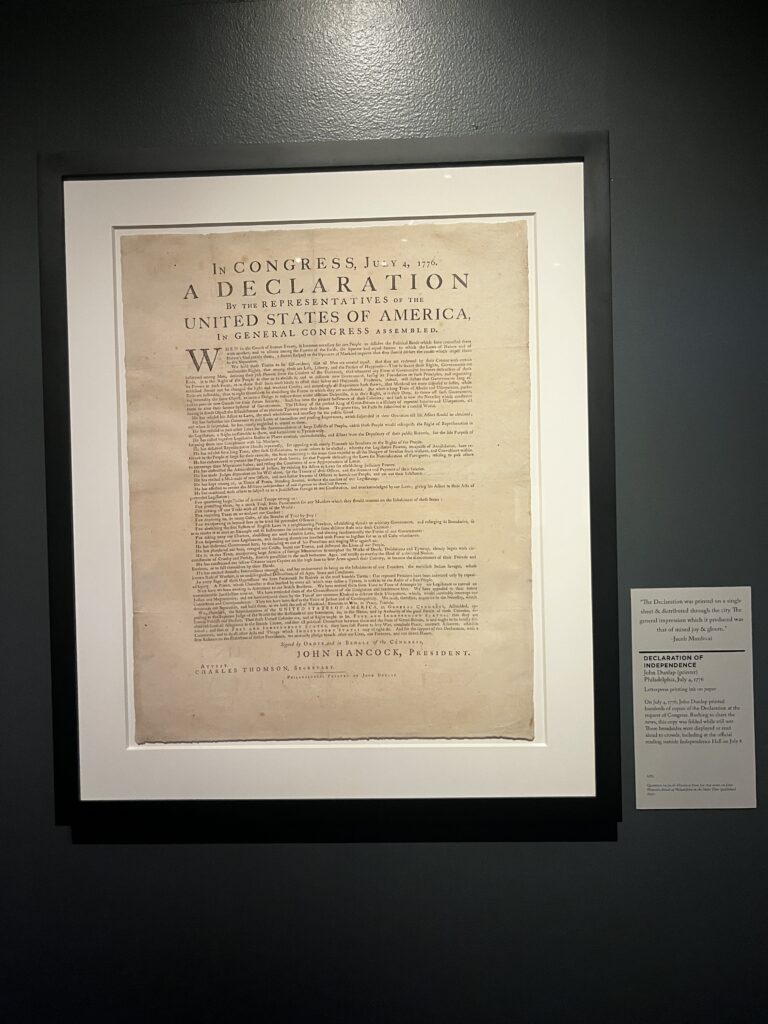
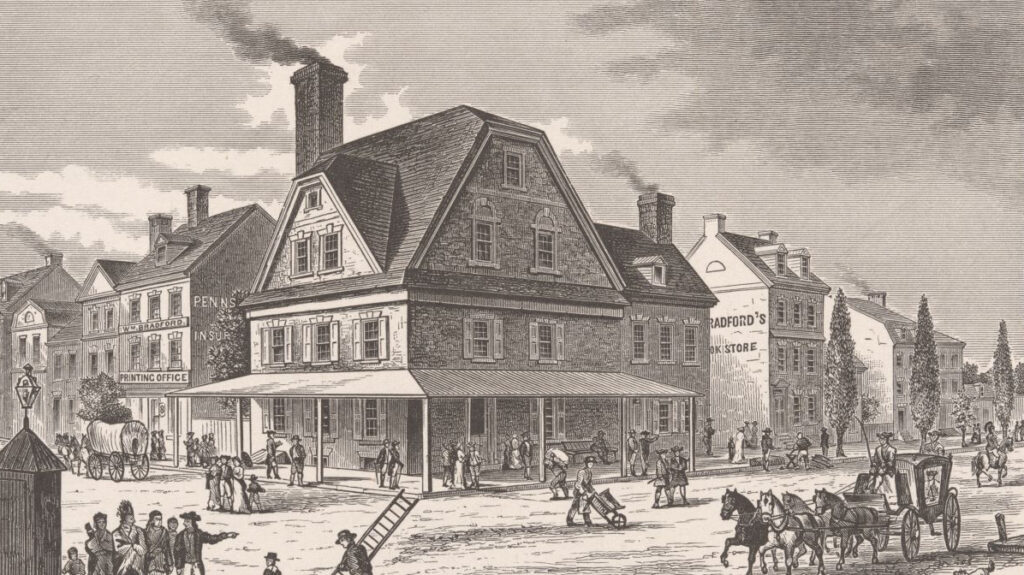
This episode talks about a lot of documents. But what did they actually look like? Below is an illustrated gallery of the documents mentioned in Episode No. 30 – Printing the Revolution, Part 2.
Many of these documents can be seen in Philadelphia at the American Philosophical Society’s exhibit These Truths: The Declarations of Independence, free with a requested donation at your discretion.
Some of the Intolerable Acts. “The following extraordinary bills now pending in Parliament…,” Broadside Printed by Edes and Gill, 1774 (Massachusetts Historical Society)Olive Branch Petition from Continental Congress to King George III, July 8, 1775 (National Archives UK)Declaration of the Causes and Necessity of their taking up Arms, first pamphlet printing by William and Thomas Bradford, July 1775 (Sotheby’s)Reprinting of King George III’s Proclamation of Rebellion in New Jersey by Royal Governor William Franklin (illegitimate, acknowledged son of Benjamin Franklin), August 1775 (National Archives)Printing of Lord Dunmore’s Proclamation, November 1775 (Library of Congress)Continental Congress Response to the Proclamation of Rebellion, broadside printed by John Dunlap, 1775 (American Philosophical Society)First printing of Common Sense, pamphlet printed by R. Bell, January 1776 (American Philosophical Society)First printing of John Adams’ Thoughts on Government, pamphlet printed by John Dunlap, April 1776 (Library of Congress)Continental Congress Resolution, printed by John Dunlap, May 15, 1776 (Library Company of Philadelphia)Postscript to John Dunlap’s Pennsylvania Packet newspaper, May 6, 1776, alerting readers to the “foreign mercenaries” joining the British military forces (Library of Congress)Edited draft of the Declaration of Independence, June 1776 (Library of Congress)Declaration of Independence, broadside printed by John Dunlap, July 4, 1776, note offset of title along the bottom of the broadside, indicating this copy was folded before it was perfectly dry (American Philosophical Society)
Used to monitor number of Google Analytics server requests
10 minutes
__utmb
Used to distinguish new sessions and visits. This cookie is set when the GA.js javascript library is loaded and there is no existing __utmb cookie. The cookie is updated every time data is sent to the Google Analytics server.
30 minutes after last activity
__utmc
Used only with old Urchin versions of Google Analytics and not with GA.js. Was used to distinguish between new sessions and visits at the end of a session.
End of session (browser)
__utmz
Contains information about the traffic source or campaign that directed user to the website. The cookie is set when the GA.js javascript is loaded and updated when data is sent to the Google Anaytics server
6 months after last activity
__utmv
Contains custom information set by the web developer via the _setCustomVar method in Google Analytics. This cookie is updated every time new data is sent to the Google Analytics server.
2 years after last activity
__utmx
Used to determine whether a user is included in an A / B or Multivariate test.
18 months
_ga
ID used to identify users
2 years
_gali
Used by Google Analytics to determine which links on a page are being clicked
30 seconds
_ga_
ID used to identify users
2 years
_gid
ID used to identify users for 24 hours after last activity
24 hours
_gat
Used to monitor number of Google Analytics server requests when using Google Tag Manager
1 minute
_gac_
Contains information related to marketing campaigns of the user. These are shared with Google AdWords / Google Ads when the Google Ads and Google Analytics accounts are linked together.
90 days
__utma
ID used to identify users and sessions
2 years after last activity
You can find more information in our Cookie Policy and .